

The Weekly Dispatch #3
Weekly round up of the latest science of learning research, news and more
This week in the Science of Learning
New paper suggests that our understanding of motivation has been stuck in the 1980s which is good for academics but not very useful for teachers and parents. Wrote a post about it here.
High-achieving math students are not a single group but vary in cognitive and motivational traits. This study in the Netherlands found distinct student profiles, with motivation playing the biggest role, suggesting they need different educational approaches to succeed.
This study analysed data from Korean students to see how early math and language skills predict high school achievement. Findngs: Early math skills strongly predict later math success, while language skills show a weaker effect, highlighting the need for better identification and support for gifted students.
The study highlights that primary-to-secondary school transitions significantly impact students' emotional well-being, with both positive and negative effects. Key predictors include self-efficacy, resilience, coping skills, and social support, influencing long-term academic and mental health outcomes. A standardized measure (P-S WELLS) is needed to better assess and support students during this transition.
Two unsung heroes
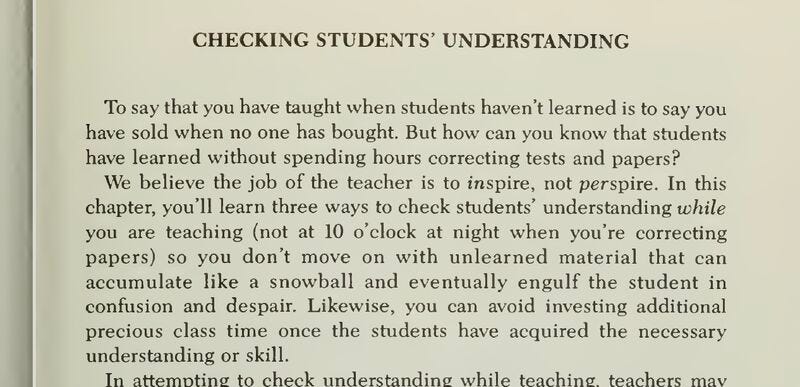
Recently I’ve been reading through Madeline Hunter’s books from the 60s and 70s. Fantastic stuff. Her whole focus is on teacher decision making and that effective instructional design as not just a means of better learning for students but also as a means of ensuring teachers didn’t have excessive workload. She took a lot of ideas from DI but as far as I’m aware, she was really one of the very first to explicitly use the term 'checking for understanding' as a means of formative assessment.
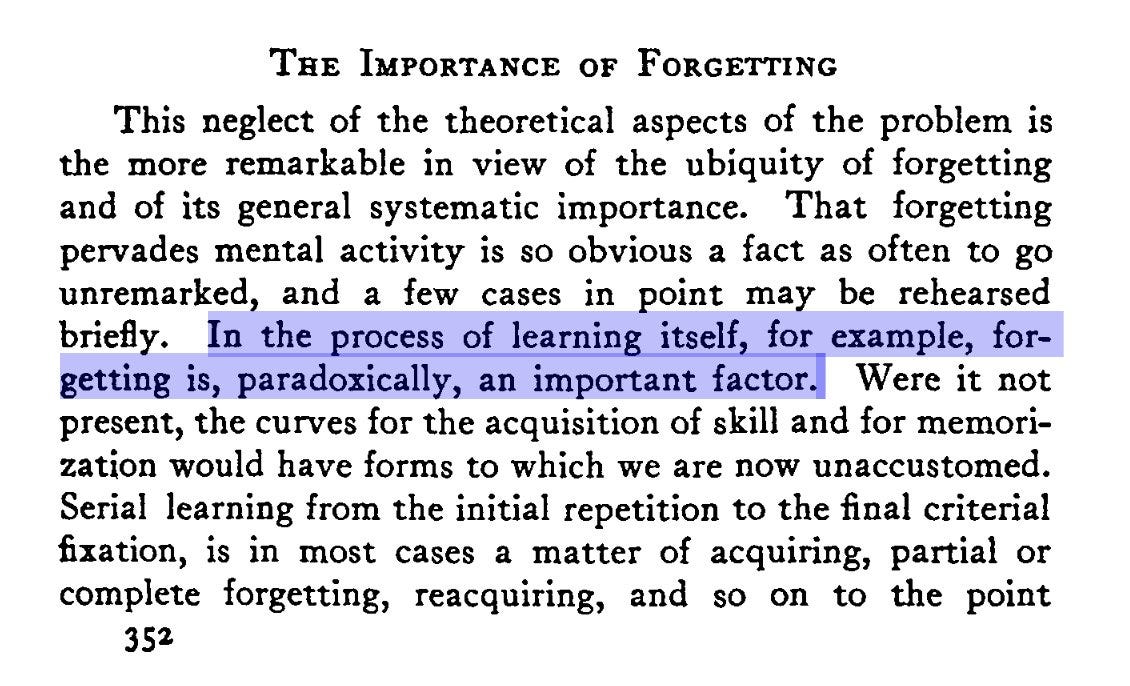
Another unsung hero of the science of learning is John McGeoch. Almost 100 years ago he was pointing out forgetting is not just a failure of memory but a necessary and systematic process that influences how we retain, retrieve, and refine knowledge. His big idea in this seminal paper from 1932 was that learning is not just about acquisition but also about preventing interference and that that memories don’t simply fade; they become inaccessible due to competition from new memories. This is not an easy read in all honesty but there's great stuff in there and also a pretty fierce critique of Thorndike's theory of disuse in it.
Upcoming Events:
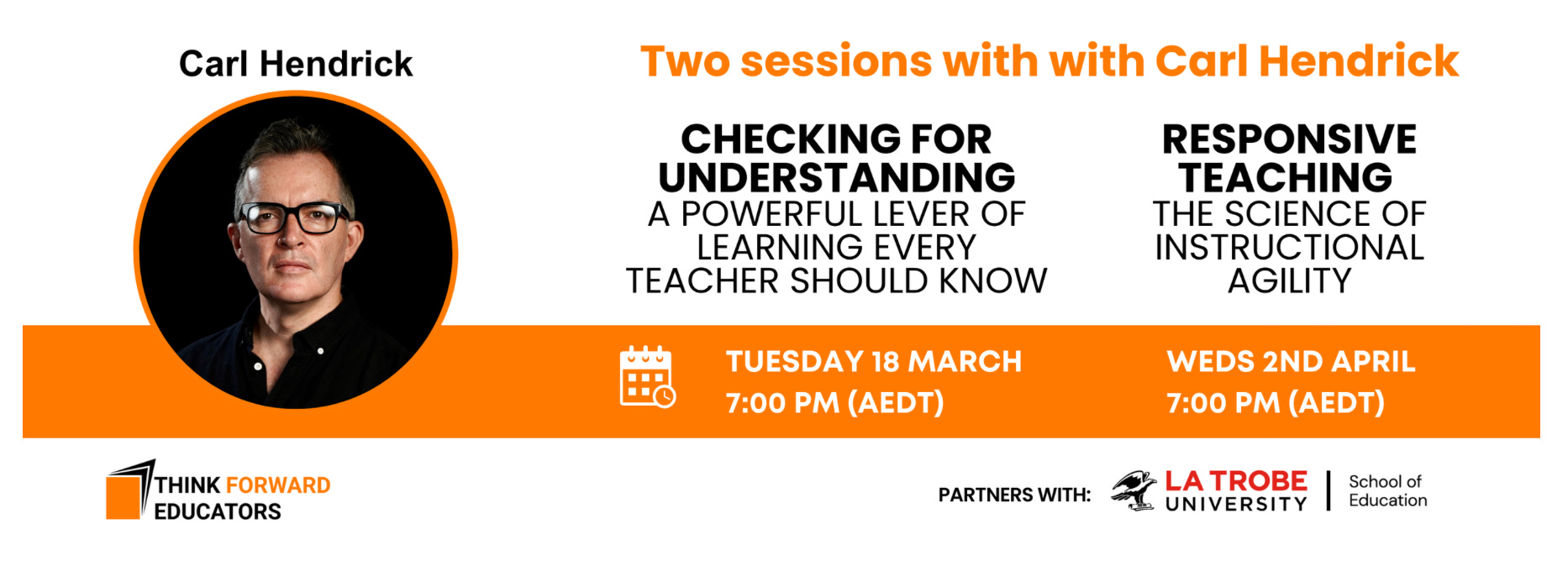
18th March/2nd April
I’ll be doing two webinars for Australian educators through Think Forward.
26th April
Keynote on How Learning Happens at the Learning and the Brain conference, New York. Details here.

11th June
Honoured to be working with Steplab and Peps Mccrea, Josh Goodrich and Sarah Cottinghatt to deliver a day training on the science of teacher expertise.

I wrote an article with my colleague Tim Van Der Meulen on instructional coaching. Read it here (in Dutch)
Want to know more about educational coaching? On April 17 and May 21, we organize one-day training courses at Academica University of Applied Sciences for those interested. Sign up via the link: https://lnkd.in/ei_9QDGj
Also check out the How Teaching and Learning Happens course
Fantastic post! I've long sought a way to keep up with developments and revisit time tested views on education.
Since my dissertation is on teacher decision-making, I’d like to know which Madeline Hunter book…I would love to read that! 🙂🙏🏼📚